HASTINGS
by Matthew Willshire, student
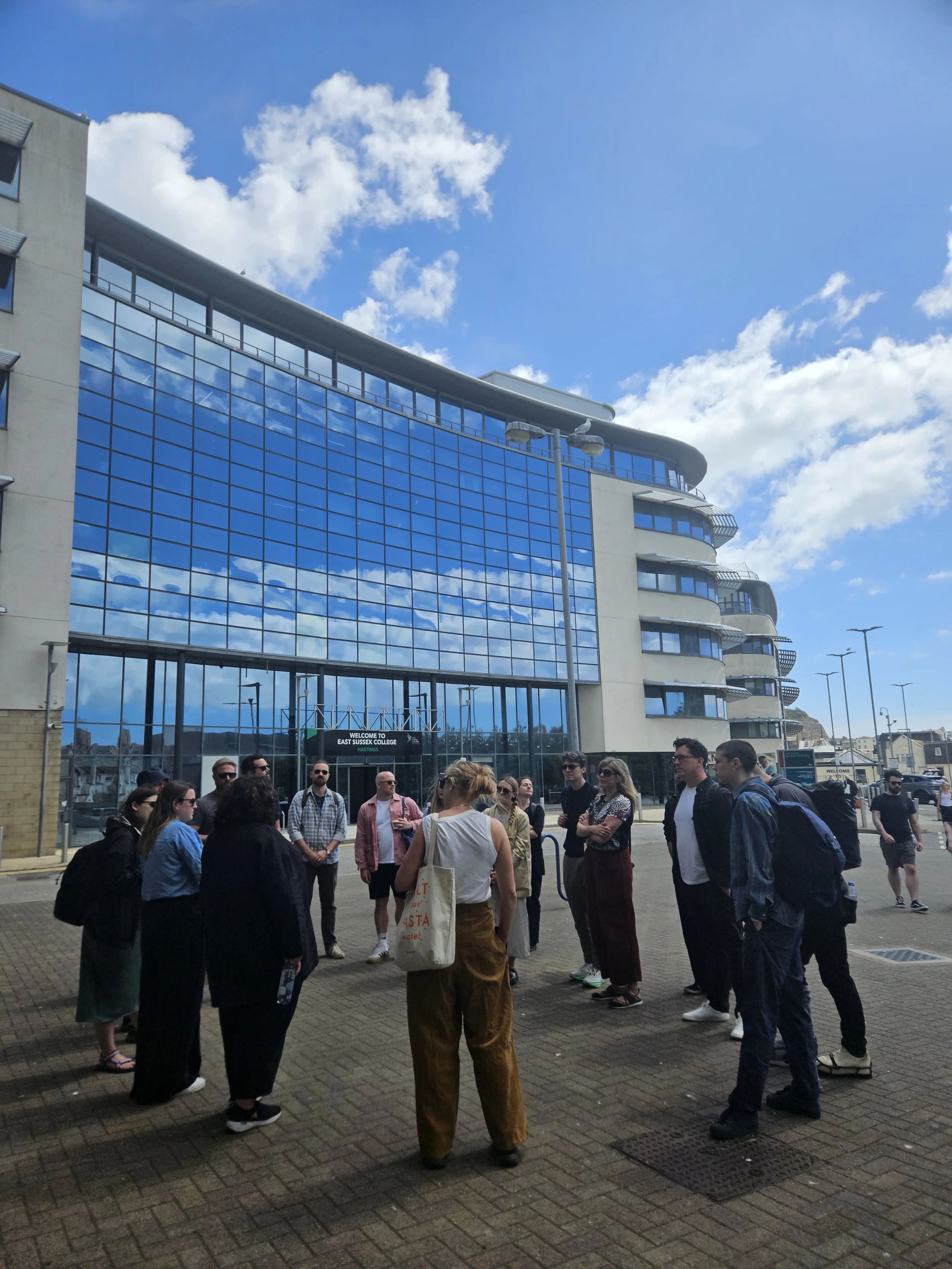
In Hastings, members of we were treated to three different schemes all working to improve the town for the local community.
Hastings Commons
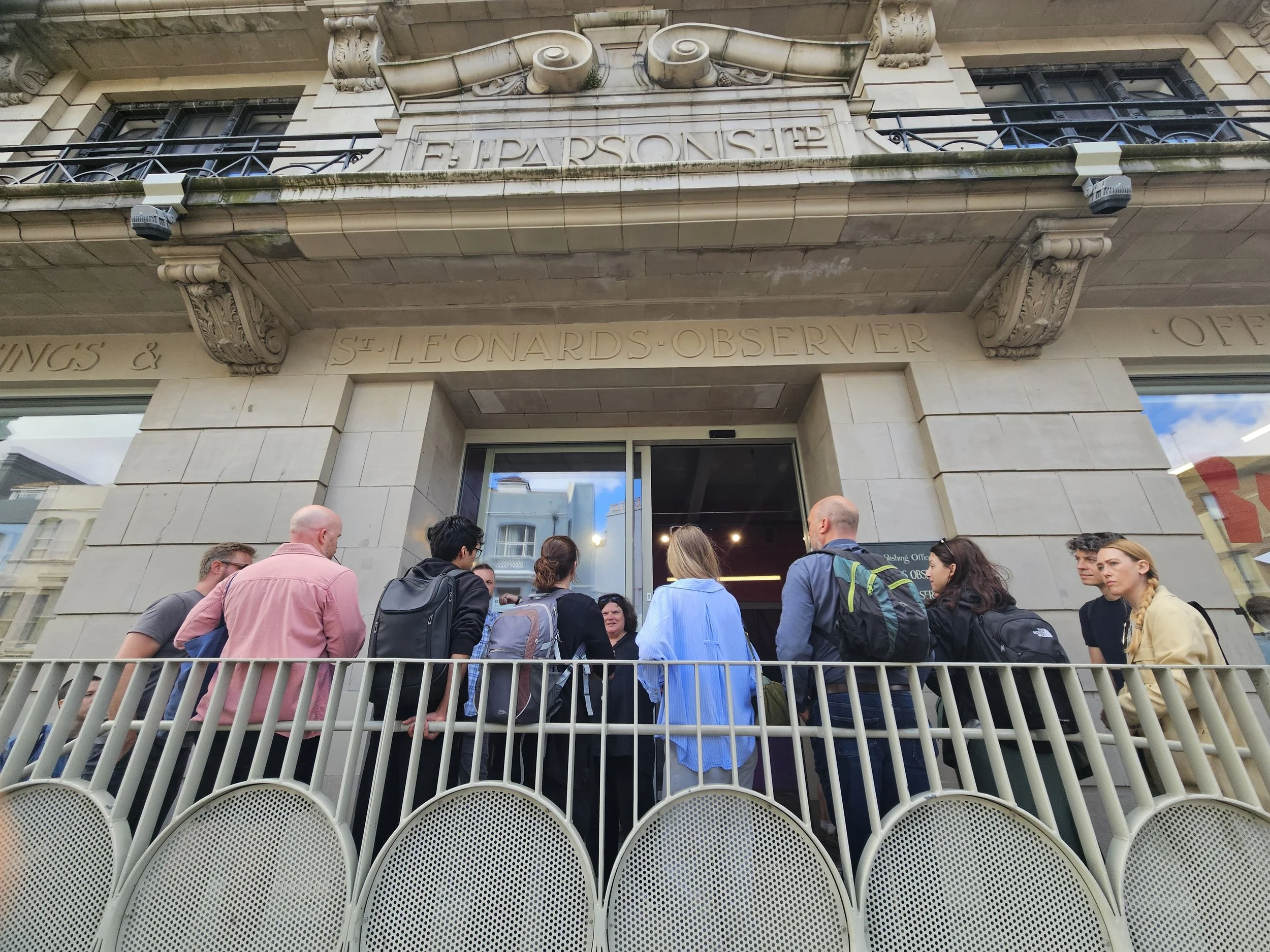
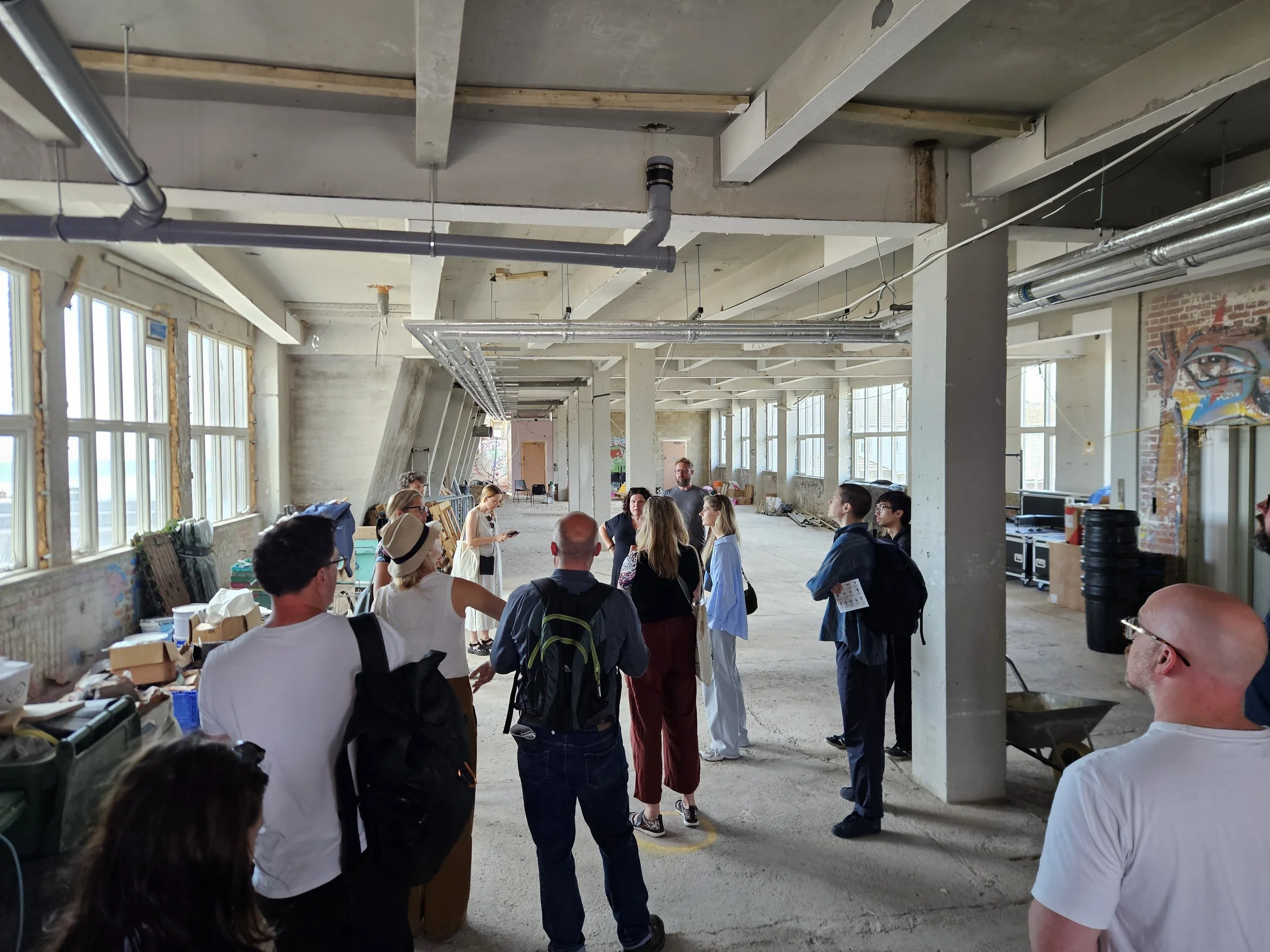
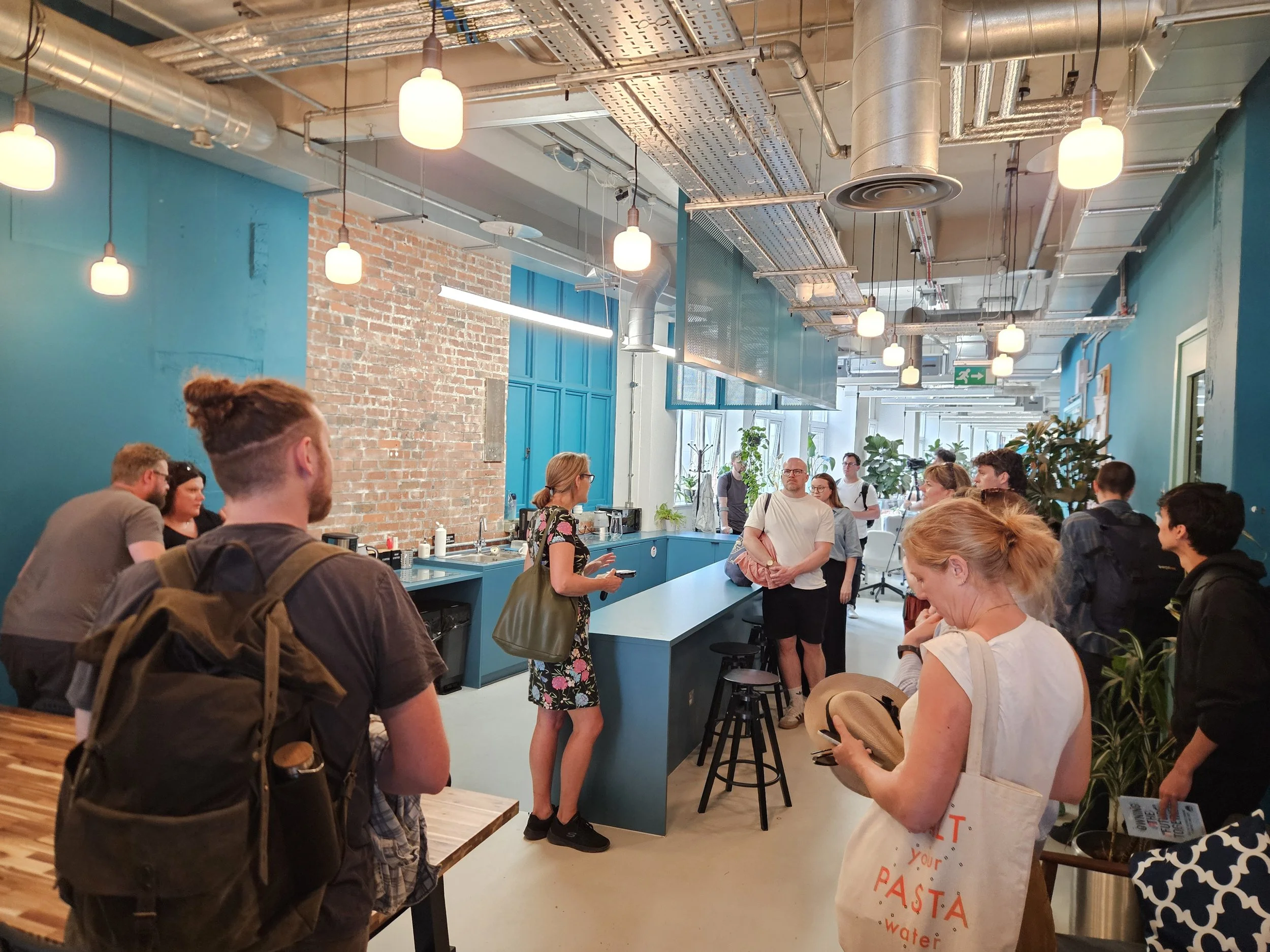
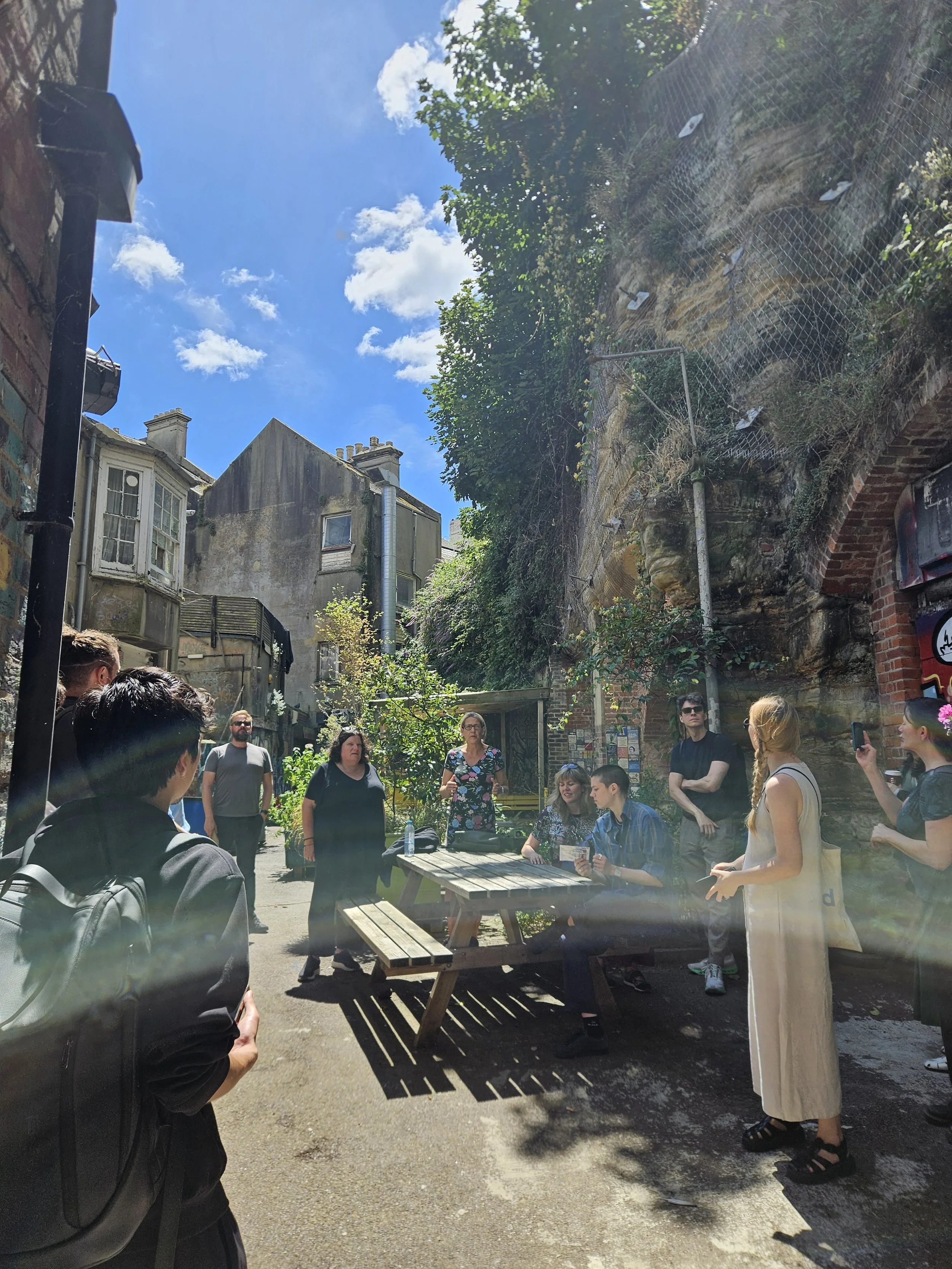
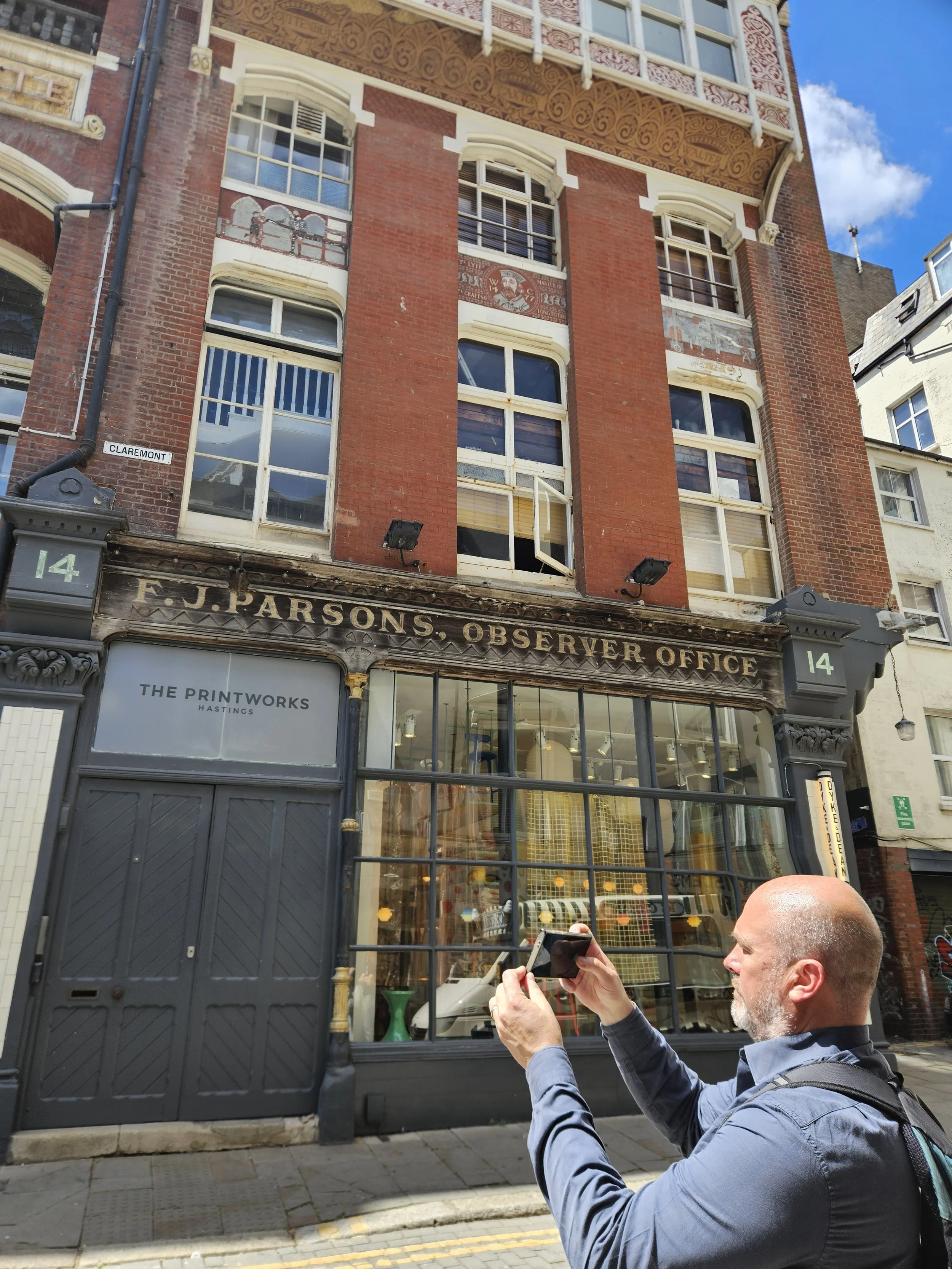
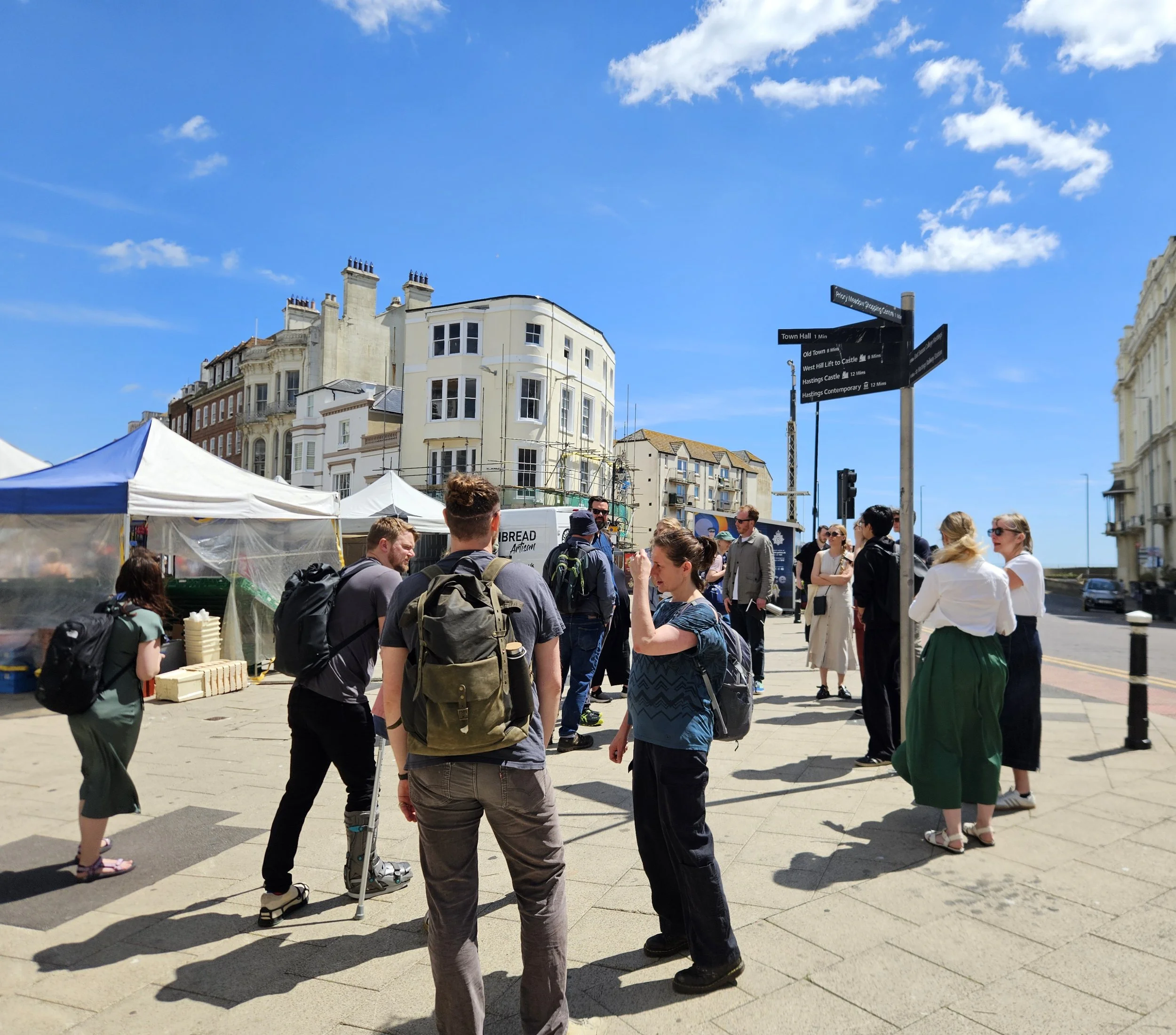
Hastings Commons is an ecosystem of charities and community organisations that act as stewards for a collection of buildings around the White Rock area. Led by former CEO of Hastings Commons, Jess Steele, PCUK explored the Observer Building (a former print factory and publishing office), 12 Claremont Street, and Eagle House—just a few of the buildings owned by the Commons.
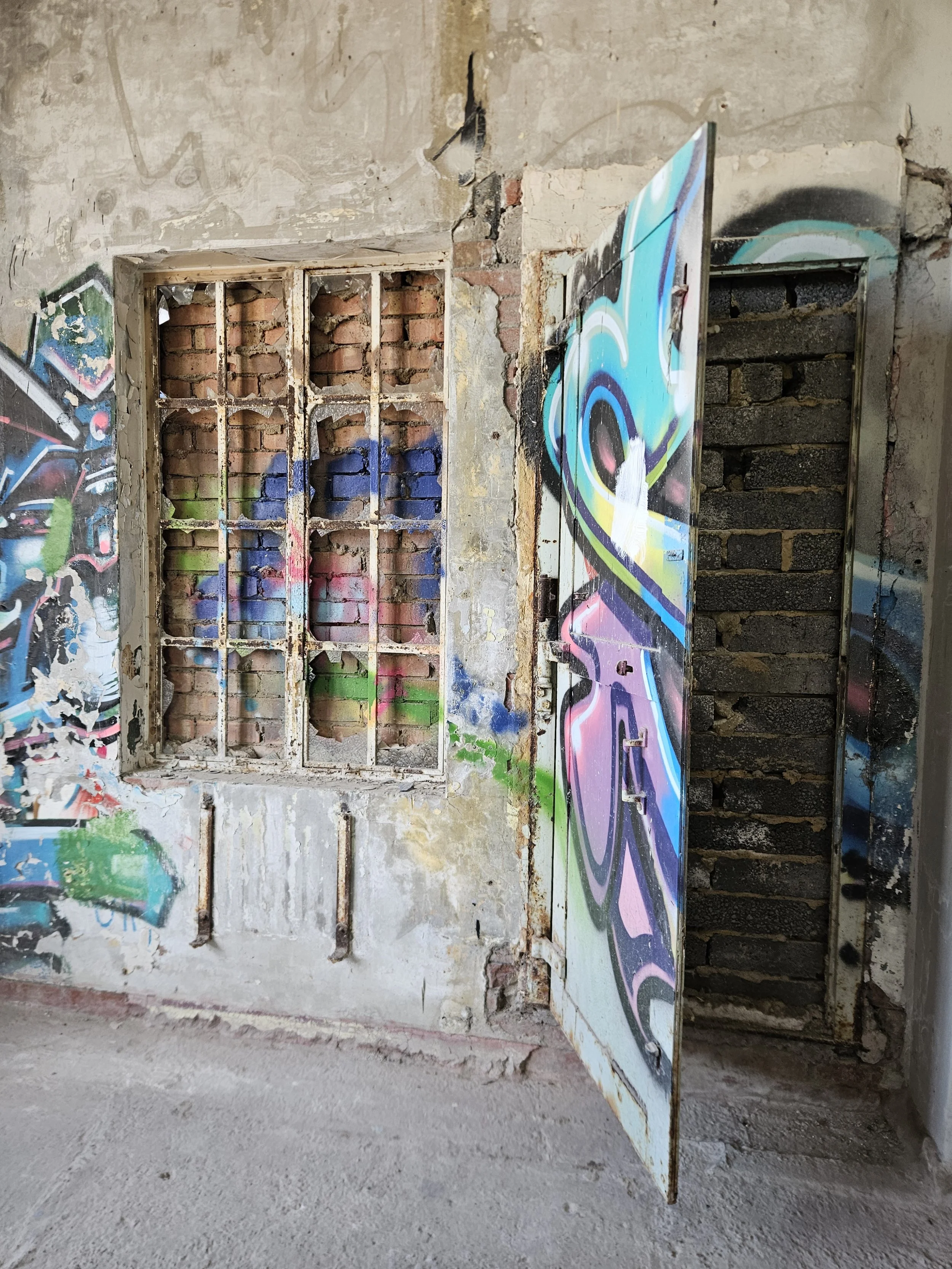
Previously derelict, these buildings have been refurbished to create new spaces through a bottom-up, organic, phased process. Community engagement is constant and central to their ethos, and new spaces include co-working spaces, studios, events venues, affordable housing, exhibition space and a completely open public living room. All of these spaces are run for the community, by the community, and have achieved incredible social benefits.
The Hastings Commons model is an innovative and exciting community-led regeneration model that stands out for its drive get things done ‘DIY-style’ in an often cautious, risk-averse context. This is an exemplar of ‘darning the fabric’, as opposed to a ‘slash-and-burn’ approach to regeneration.
Hastings Commons was funded by over 143 different grants and loans, enabled by the idea that the Commons was not a siloed project but relevant across a range of different causes. However, managing these relationships is highly challenging, and Hastings Commons still faces financial difficulties and disputes.
Town Centre Public Realm and Green Connections
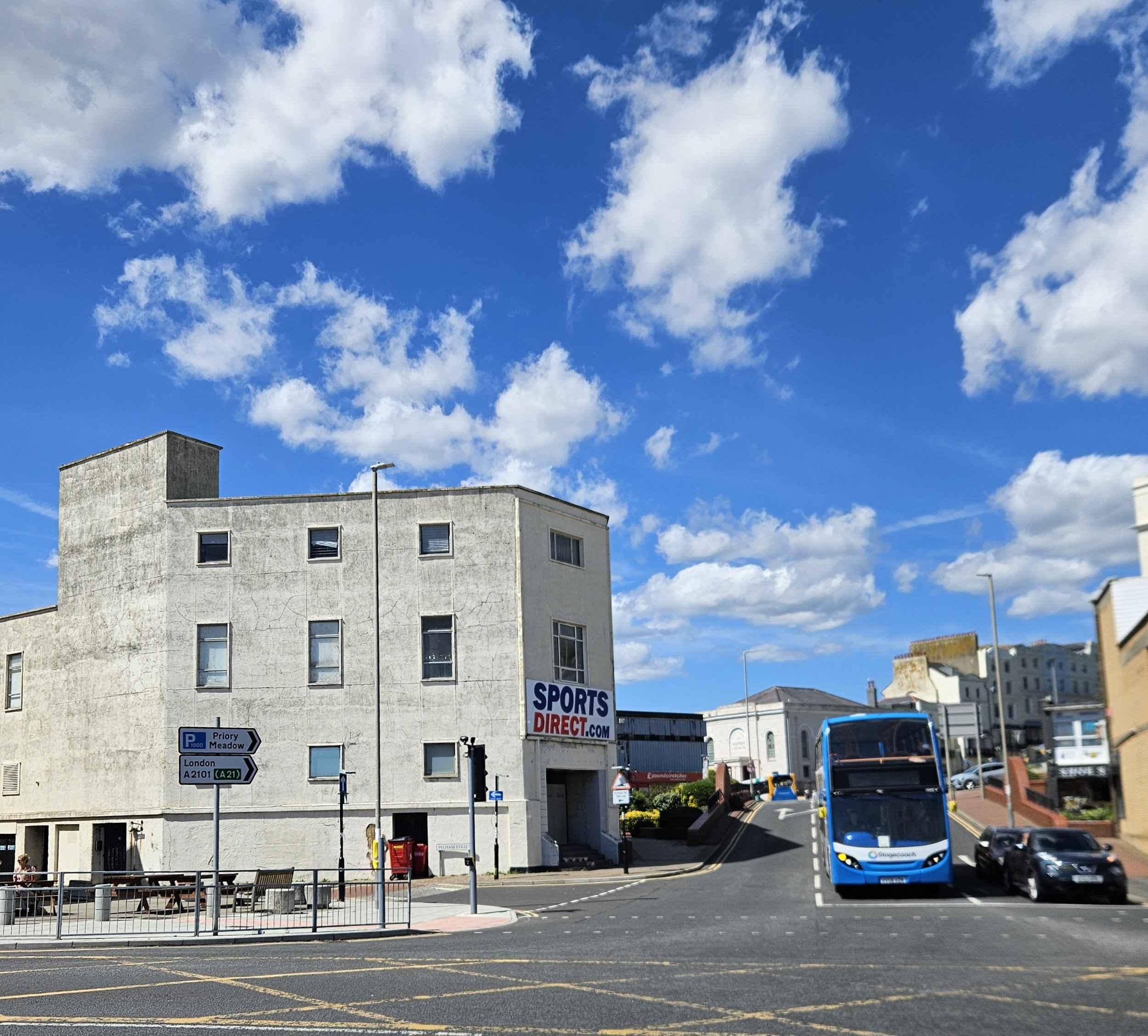
Due to start in Winter 2027 and complete within a year, the Council project is in partnership with Arup and aims to improve the public realm of Hastings town centre through increased urban greening. Urban greening will help mitigate floods through SUDS. It will also help Southern Water achieve their own targets of flood water mitigation, which potentially unlocks more funding for the scheme.
They are also aiming to improve connectivity active travel in the area, by making areas more accessible for walking, introducing cycle lanes and parklets, and increasing street lighting. A site in Priory Square will be the main hub to store gardening equipment.
This project is inspired by Sheffield’s Grey to Green scheme.
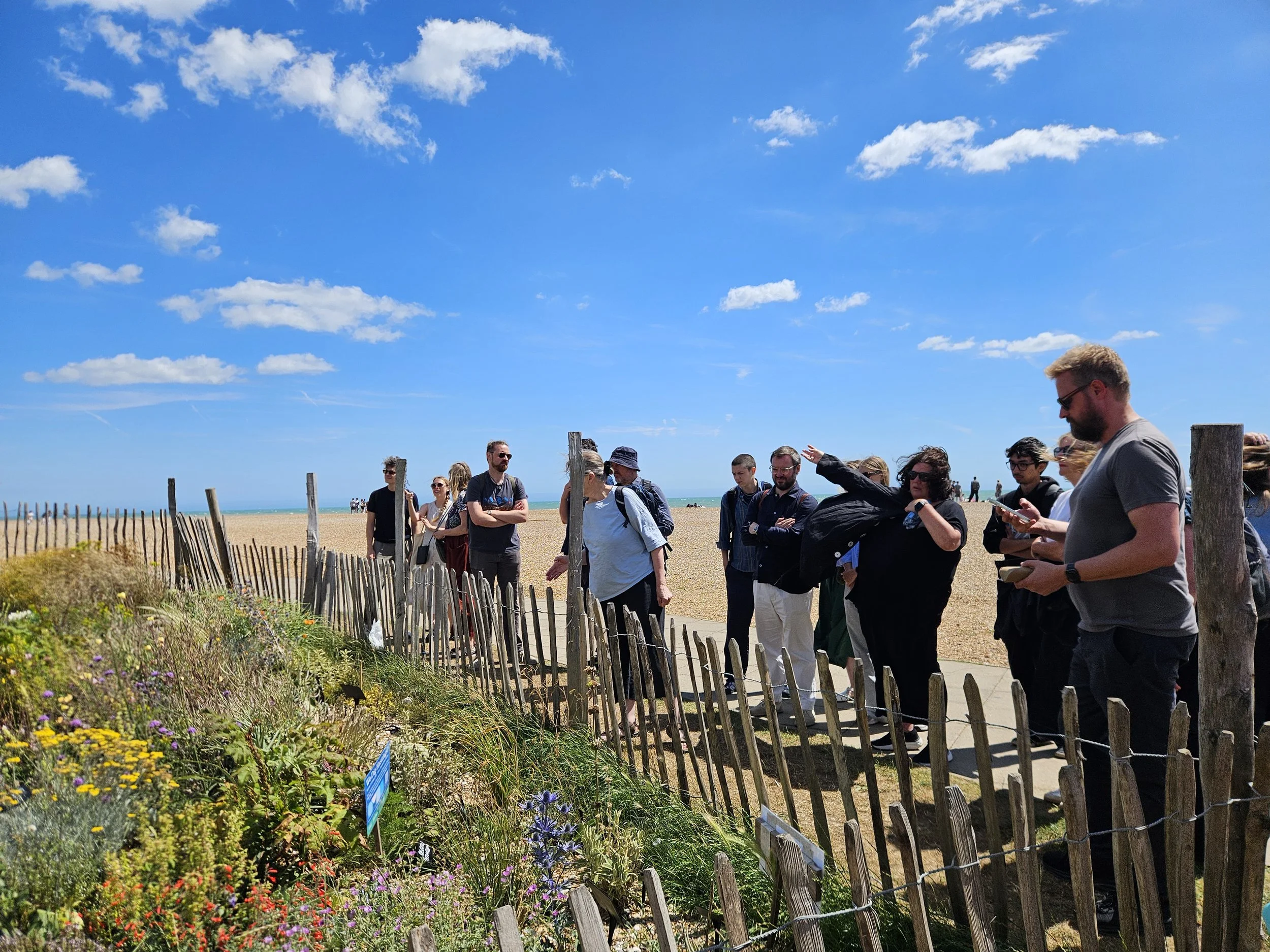
PCUK were shown an example of community planting, which served as a trial to ensure plants would be weather-proof. Community planting is an opportunity to embed the community early into changes to the public realm, make plans seem more tangible, and help build support for the project.
The novelty of the scheme in the area raises challenges in project management, made more challenging by the two-tier leadership structure of Hastings. East Sussex County Council is a Reform minority administration, while Hastings Borough Council is majority Green.
Source Park
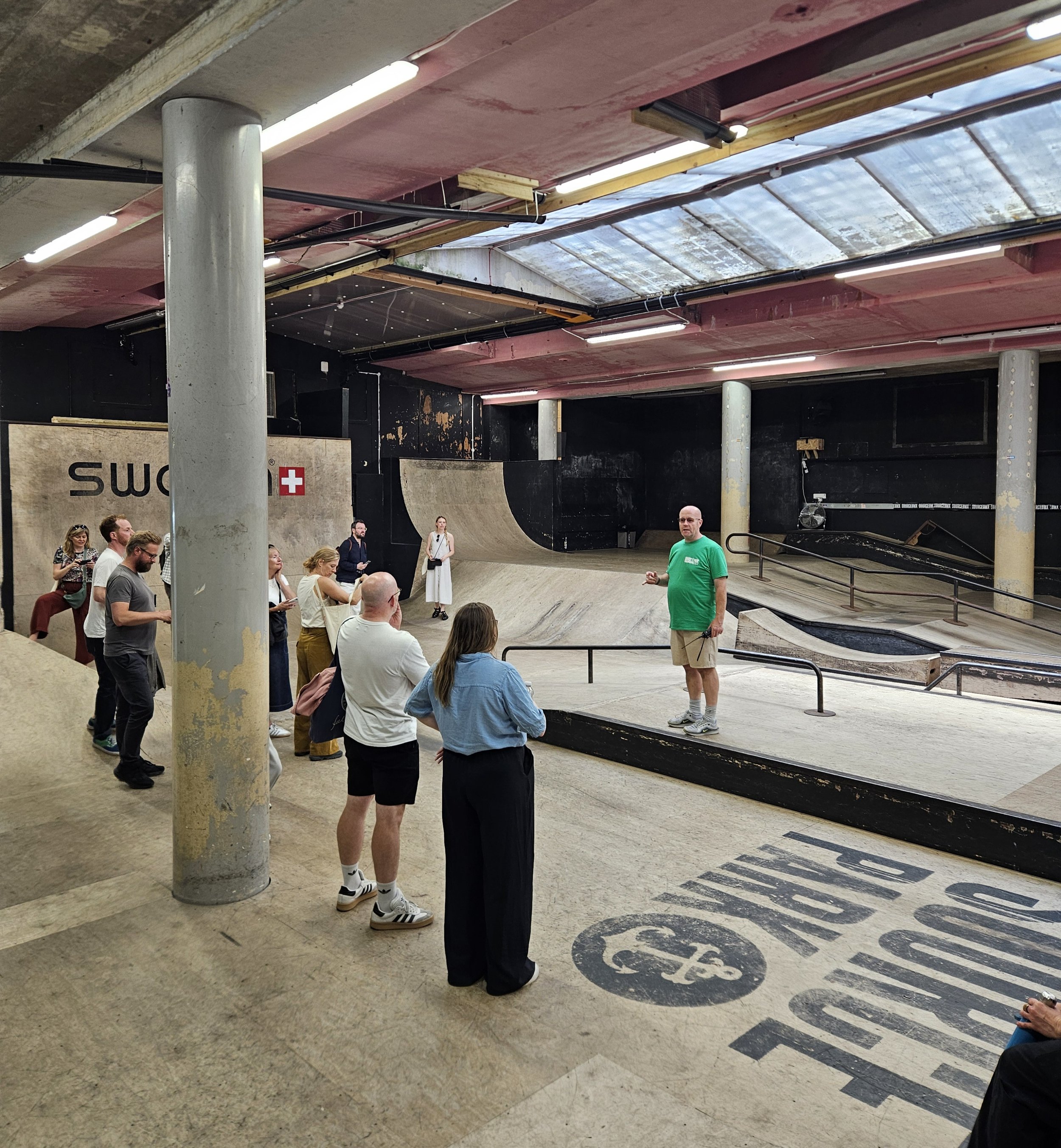
The final stop for PCUK was the world’s largest underground skate park, Source Park. Previously communal baths, unused since 1997, the space has been refurbished to provide two skate halls for a thriving community of BMXers and skateboarders. There are also spaces for live music events and DJ sets, as well as a food and beverage offering to help support the running of the park. Overall, there is a clear diversity in the people who use this space, but ongoing challenges of fending off water ingress and robbery.
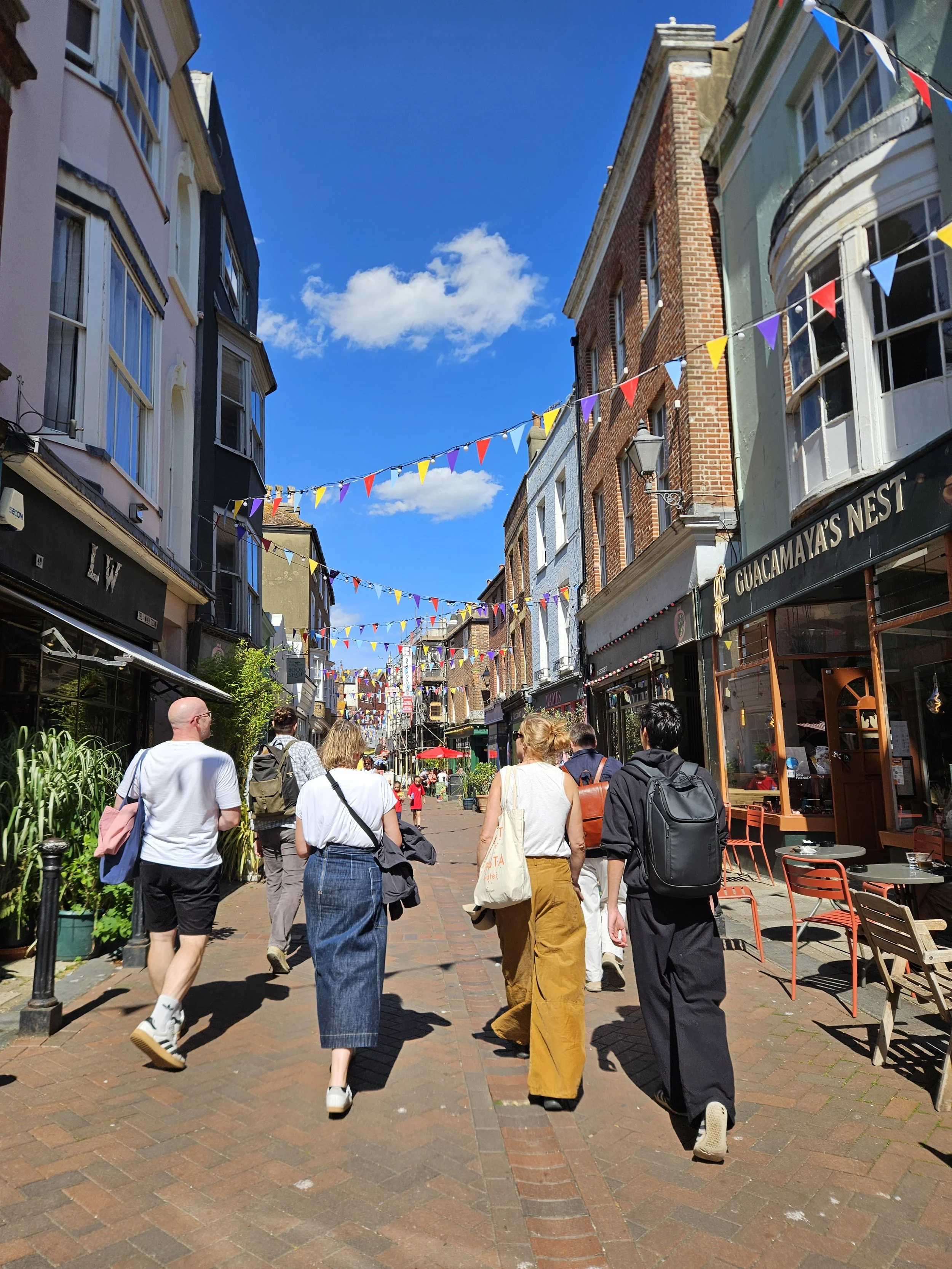
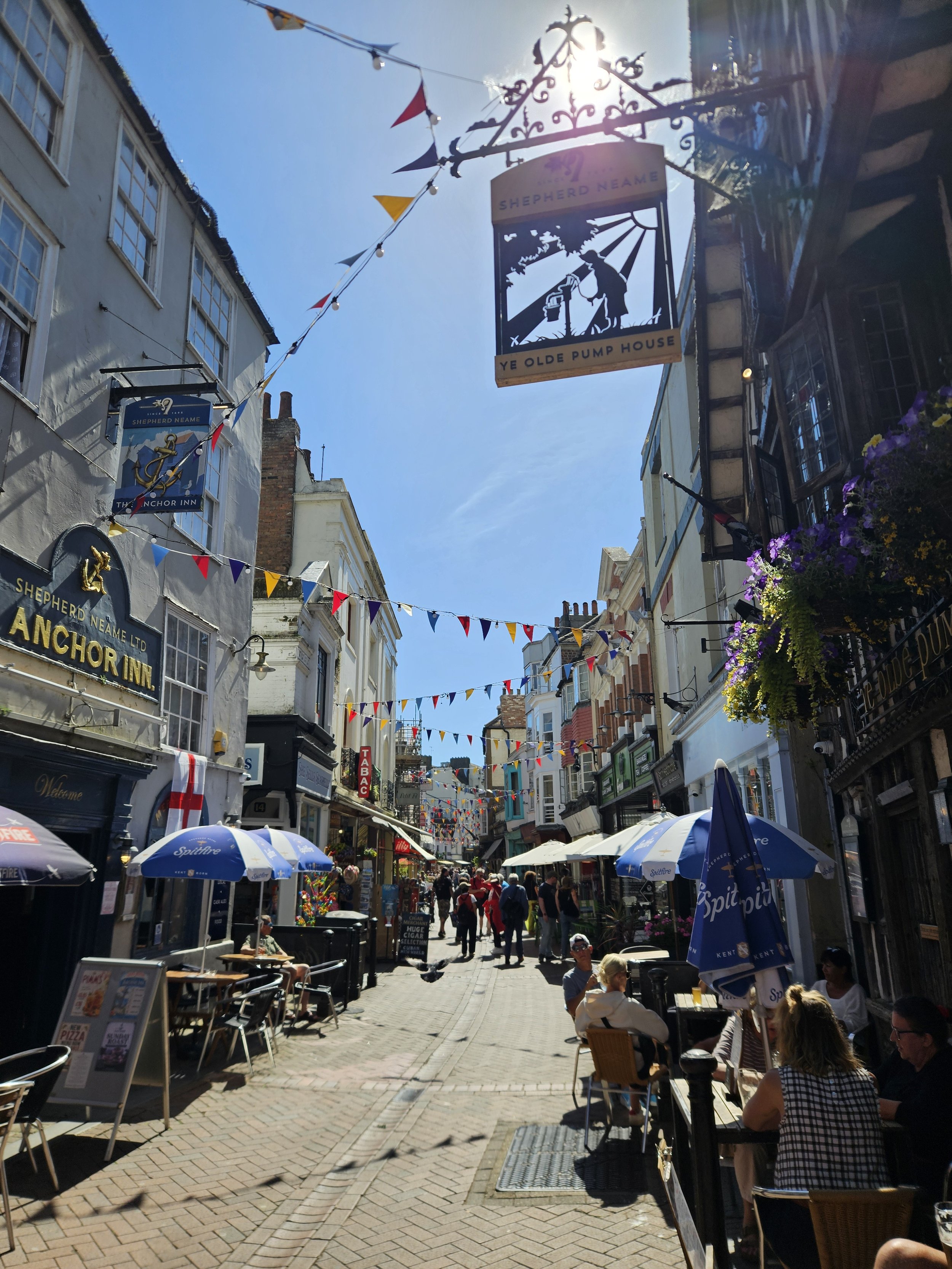
A brilliant day in the sunshine by the sea-side, culminated in the old town and well-deserved drinks!