BUDAPEST
Places to live and liveable places
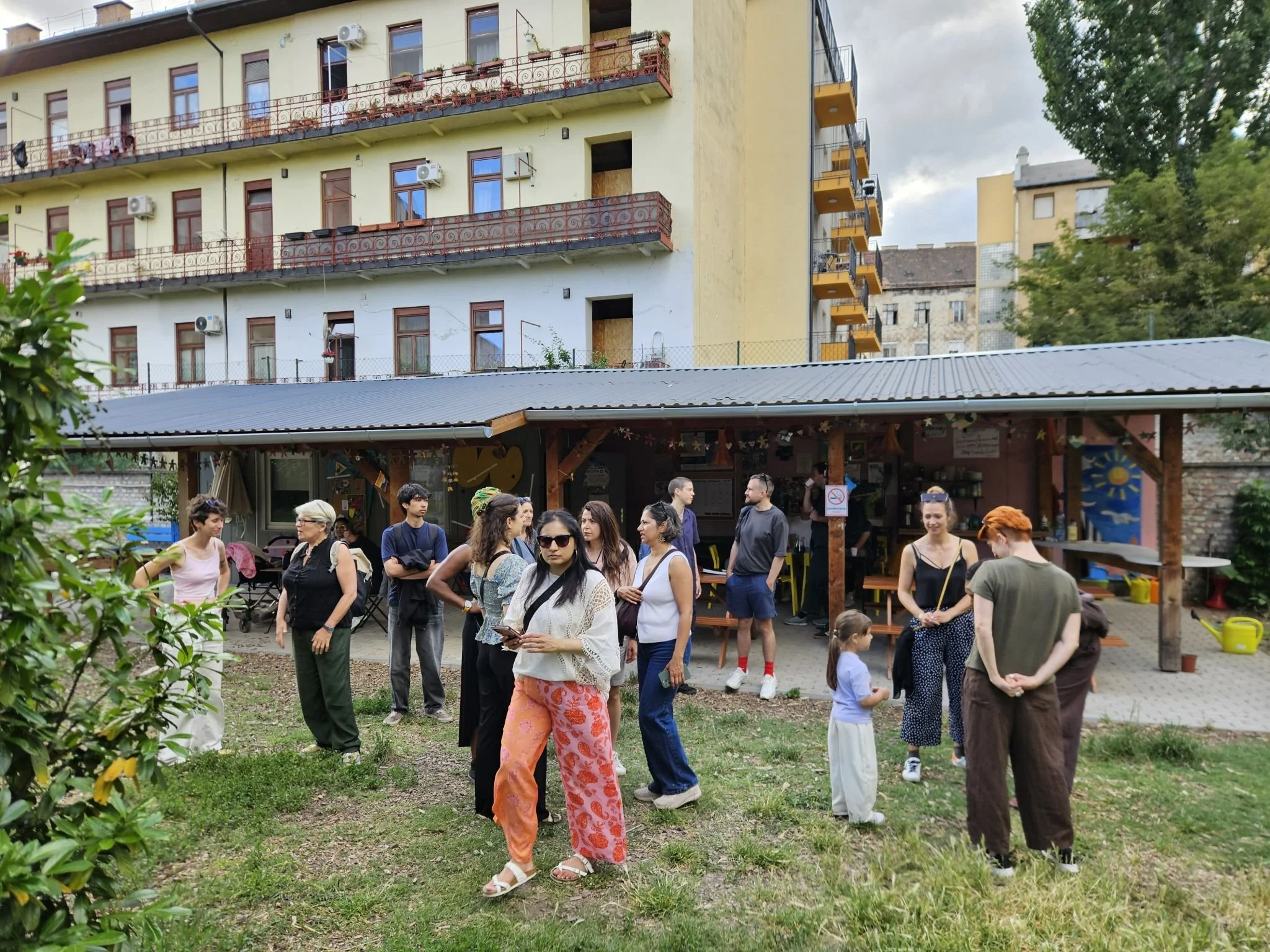
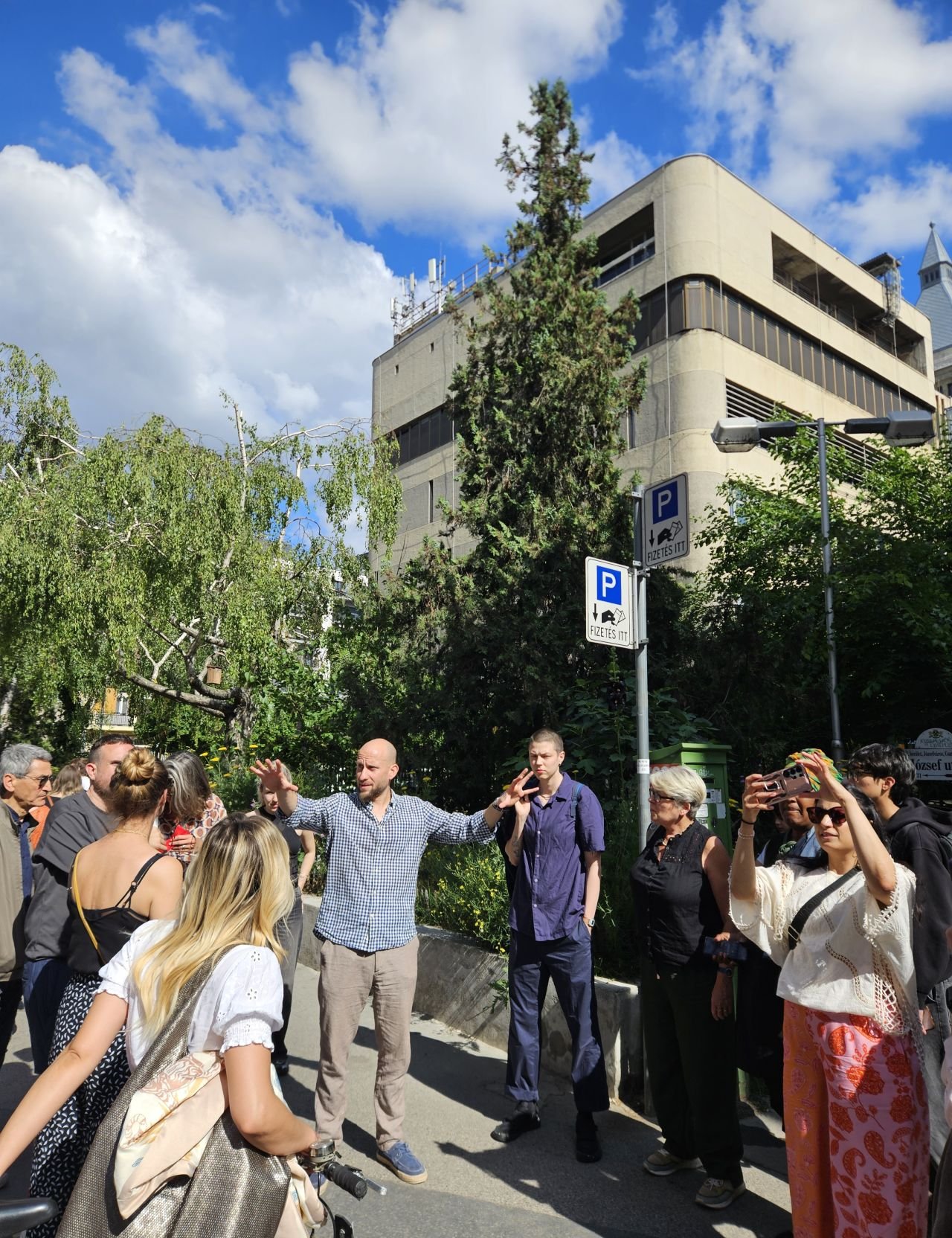
Our first afternoon was spent in Józsefváros [https://jozsefvaros.hu/otthon/], the 8th District, hosted by the Deputy Mayor Daniel Rádai and his housing team. This left-of-centre administration has been working against the grain under the rule of Orban for the past 6 years, focusing on housing, affordability, social mobility and the role of local government in the creation of healthier, safer and more equitable neighbourhoods.
Their relentless focus on housing is driven by extreme need. In the post-communist decades, the state was left with an exceptionally large property portfolio, in very poor condition and not fit for purpose; small spaces and poorly built, expensive to heat and to cool. With limited resources the council are working at pace to bring their estate back into use but it will take time. Perhaps now that the country has new political leadership, they might be able to secure much needed national and city investment to scale up their work.
Alongside housing they are busy with creation of new public and green spaces in their dense urban grid. Willingly learning from other cities in the creation of “school streets”, pocket parks, extensive street-tree planting and greening neighbourhoods through road closures creating community gardens and new pedestrianised areas – all together creating a much more liveable neighbourhood.
Creative capacity and community building
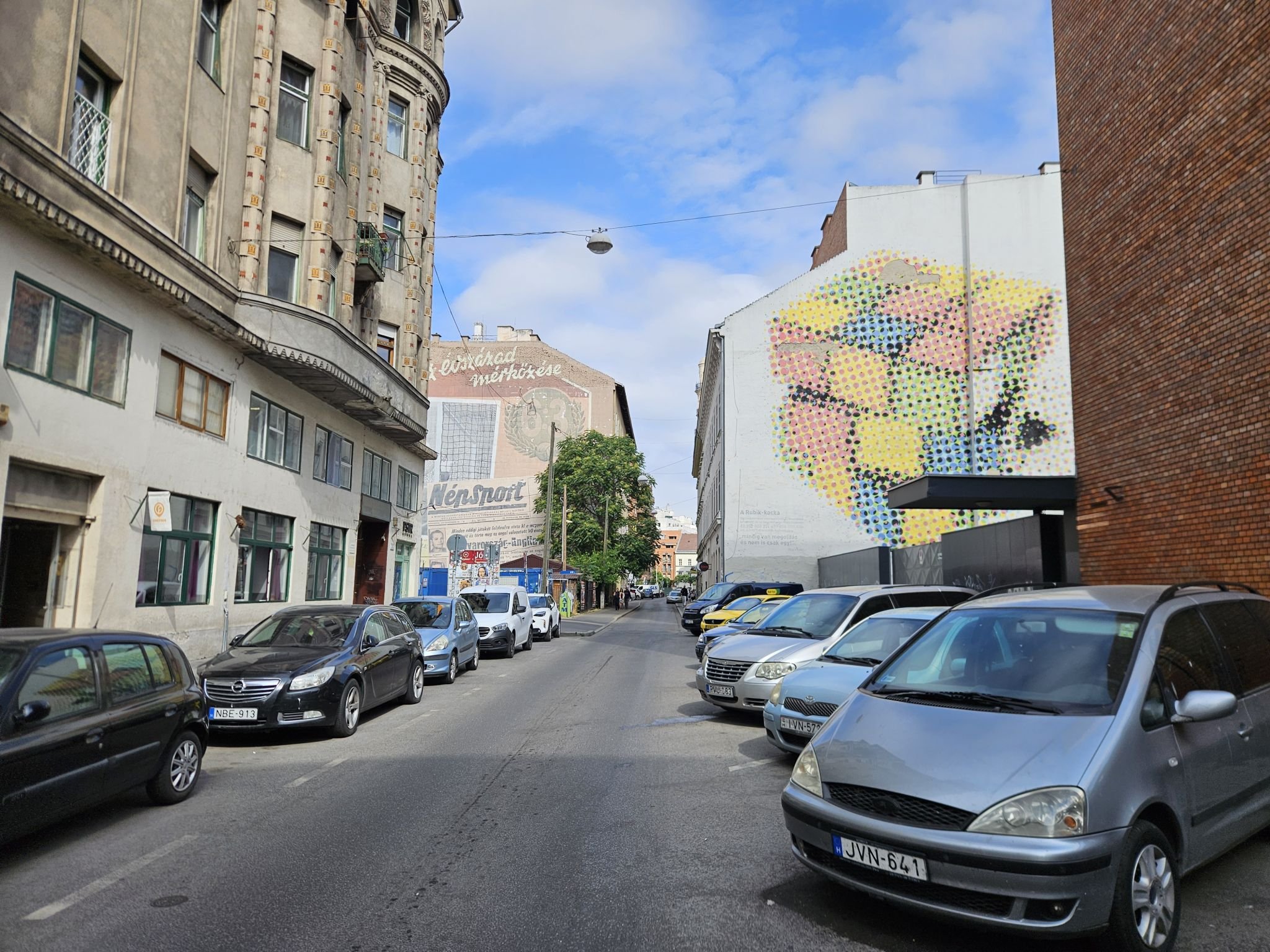
Next morning took us to Újbuda, [https://ujbuda.hu/] the 11th District. For much of the early 20th century this was the cultural centre of the city, home to music and arts, spaces for conversation and debate, politics and philosophy. It is now an area with a high proportion of late 19th century tenement buildings, often empty and in poor condition. Whilst there are some artists here taking advantage of empty spaces, until recently contemporary art was not well developed or supported.
We heard from Dániel Ongjerth who established and runs 11/11 [https://www.1111.org.hu/], a creative agency bringing underused buildings and spaces across the district into use as affordable studios, as well as programming exhibitions - “creating a new layer in the neighbourhood”. Having cut their teeth in the 11th, they are now taking on a vast new site across the city. S1 covers 12 hectares, was an old brewery and before that a quarry. Certainly one to come back and visit as it moves forward.
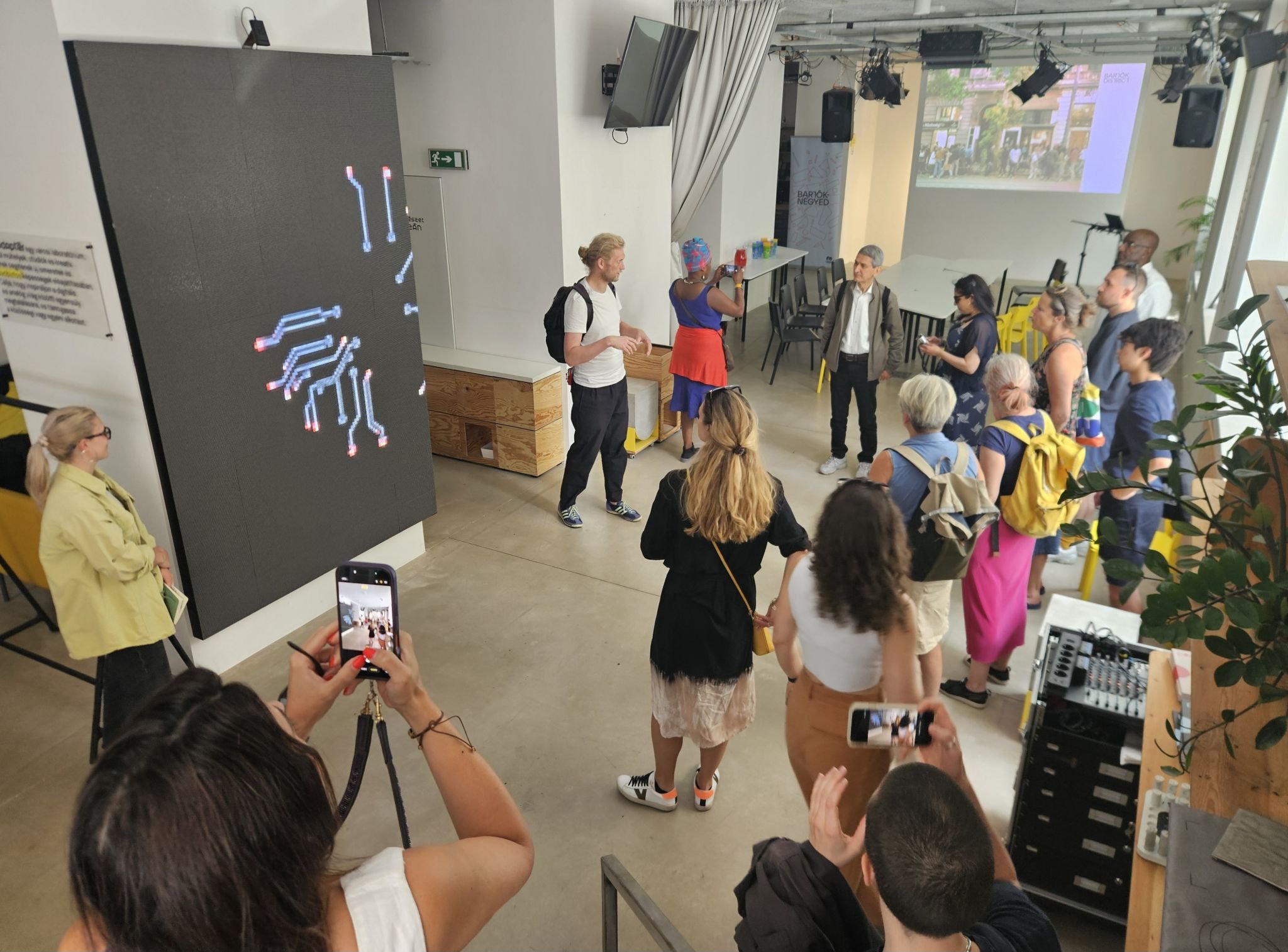
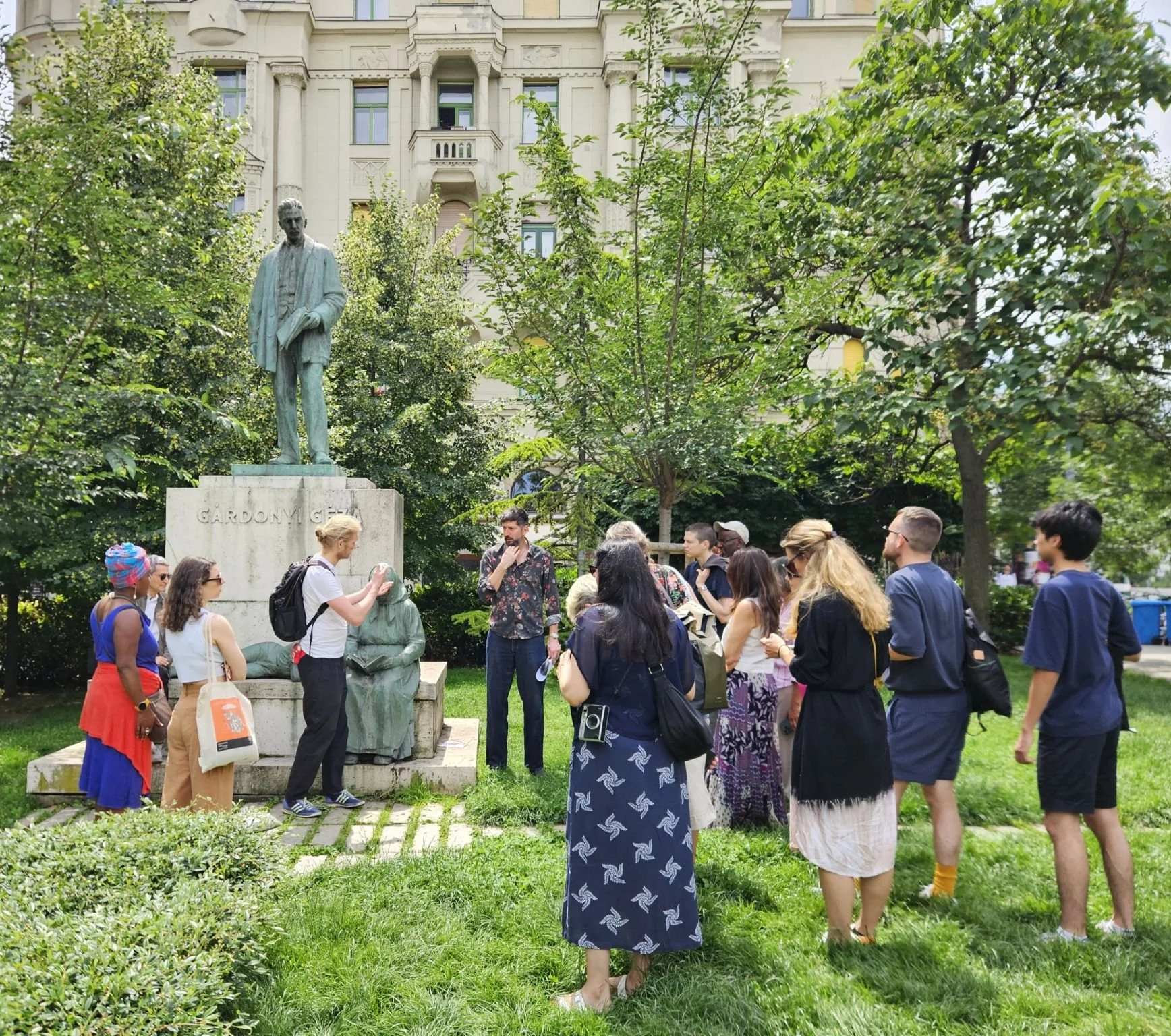
In the 2000’s the Ujbuda local government consciously set out to support the revival of the cultural character that previously characterised the area around Bartók Béla út. Our visit took us next to a space where Bartók-negyed [https://bartoknegyed.hu/mi-az-a-bartok-negyed/] are based - in 2023 local government initiated the establishment of this cultural development agency, to coordinate the life of the quarter, contribute to the flow of information and strengthen the community. They support non-profit organisations – both contemporary art and those developing the local economy, through support for grassroots projects. We heard about programmes which are building cohesion, cultural capital and capacity as well as illuminating what is already there such as their “Value Inventory” - making the hidden value of the quarter visible to all.
An all too brief visit followed, to meet the quite extraordinary character of Tibor Bosznai in his restaurant Hadik [https://hadikszatyor.hu/en/] which had its heydey in the 1910’s. His energy alone could power the city and his passion for this district was unbelievably strong. As a business owner he sees his role as a critical part of the network of people and organisations who bring life to the district through culture, sometimes breaking rules and always saying “yes!”.
We were also hosted by the Centre for Contemporary Architecture, KEK [www.kek.org.hu] a group of urbanists and architects looking for new ways to imagine the city. They programme a range of events – film festival, young people’s projects - undertake research and engage in EU funded placemaking projects including a project along the Danube, exploring rural placemaking in villages across Europe.
Space to walk and creating playfulness - switching off the traffic
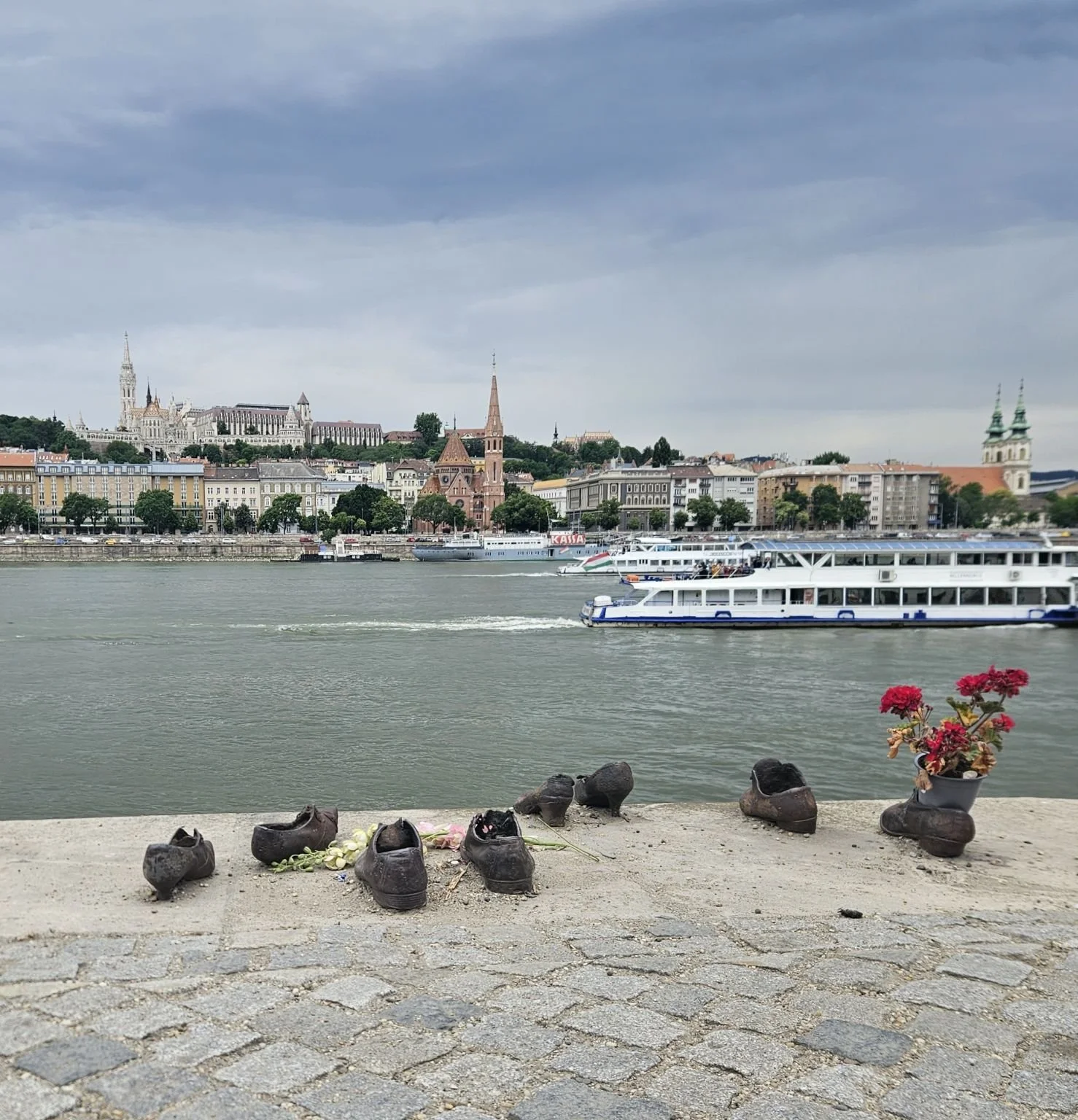
On our last evening we gathered at 6 o’clock on the riverbank, close to the stunning parliament building, to experience the moment when the traffic is ‘switched off’ for the weekend. After a successful pilot and long campaign the riverside is now car free 24 hours a day on weekends and every weekday evening from 6:30pm.
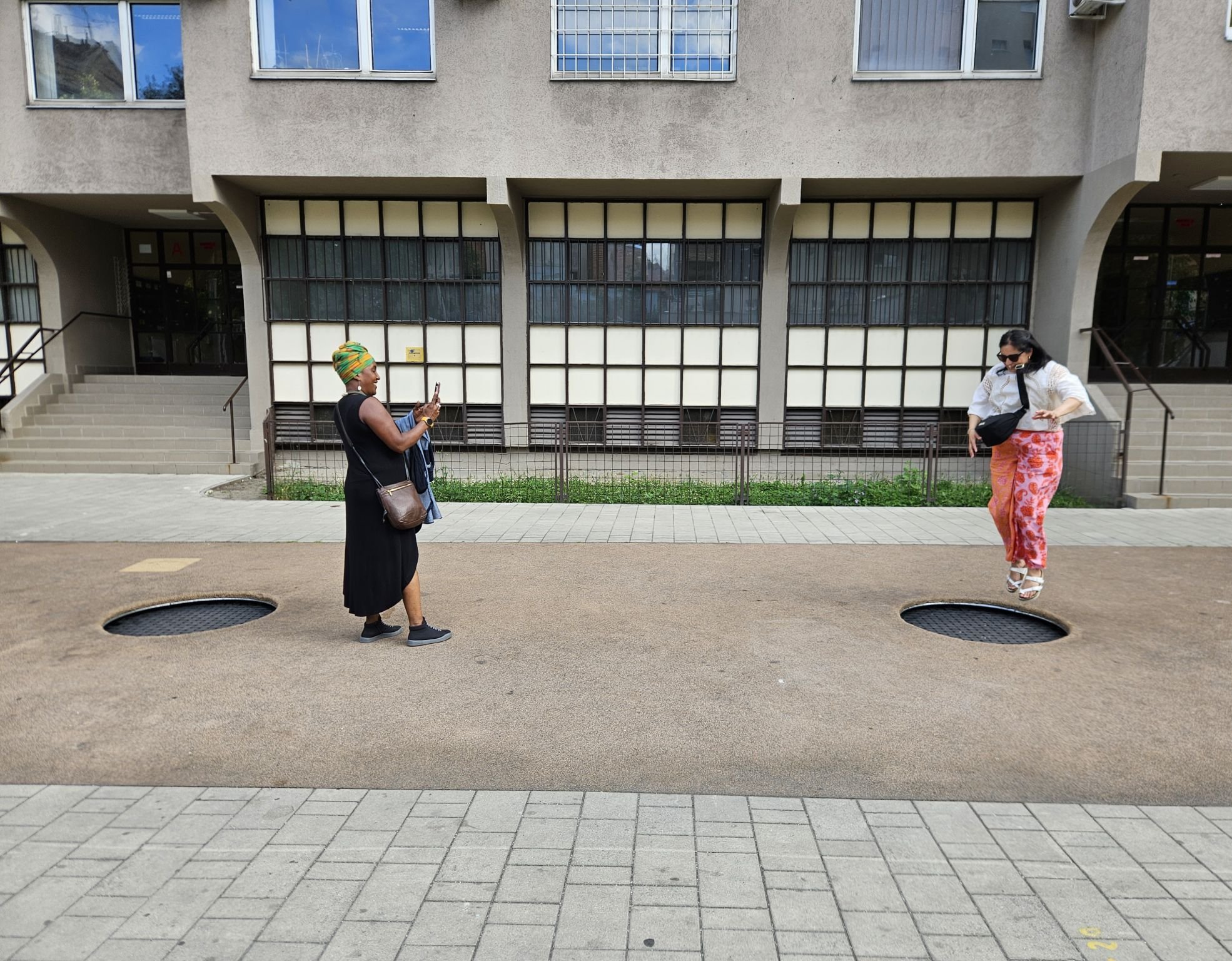
For a while we stood with our ebullient guide Samu from the charity Valyo [https://valyo.hu/], place-makers bringing people closer to the Danube, watching the cars roll past. Fewer and fewer cars came, until the moment when the riverside was reclaimed by those on foot or human powered wheels. Under the arches of the tram’s viaduct a whole series of pop-up bars began to open and set out their tables, bands set up for later gigs and we watched the life of the city come to the riverbank. As well as the bars there is a strip of the embankment dedicated to playfulness curated by Valyo. Whether it’s using the concrete bollards to create benches and tables for people to rest, sit and socialise, or a hut full of games which people can borrow to play together.
The next morning before saying goodbye to the city, I visited the same stretch again and watched a family on bikes, scooters and skates make their way safely for miles along this traffic free street.
Reflections
Over all three districts these were all projects which, in different ways, were helping ordinary people to take up more space, space they need to thrive.
Across Budapest and in so many of the other places that we visit and work in, spaces become empty for a range of reasons, historic, political, economic, however the approaches to address the problem have common characteristics. Community and capacity building, bravery and vision, networks and skills sharing, experiments and pilots towards proof. And always, people in positions of power, with levers or money, need to say ‘yes’ more than ‘no’, to trust and to work in partnership.